Mechanical Typewriter Keyboard Configuration
The Flawed Design of Typewriter Keyboards
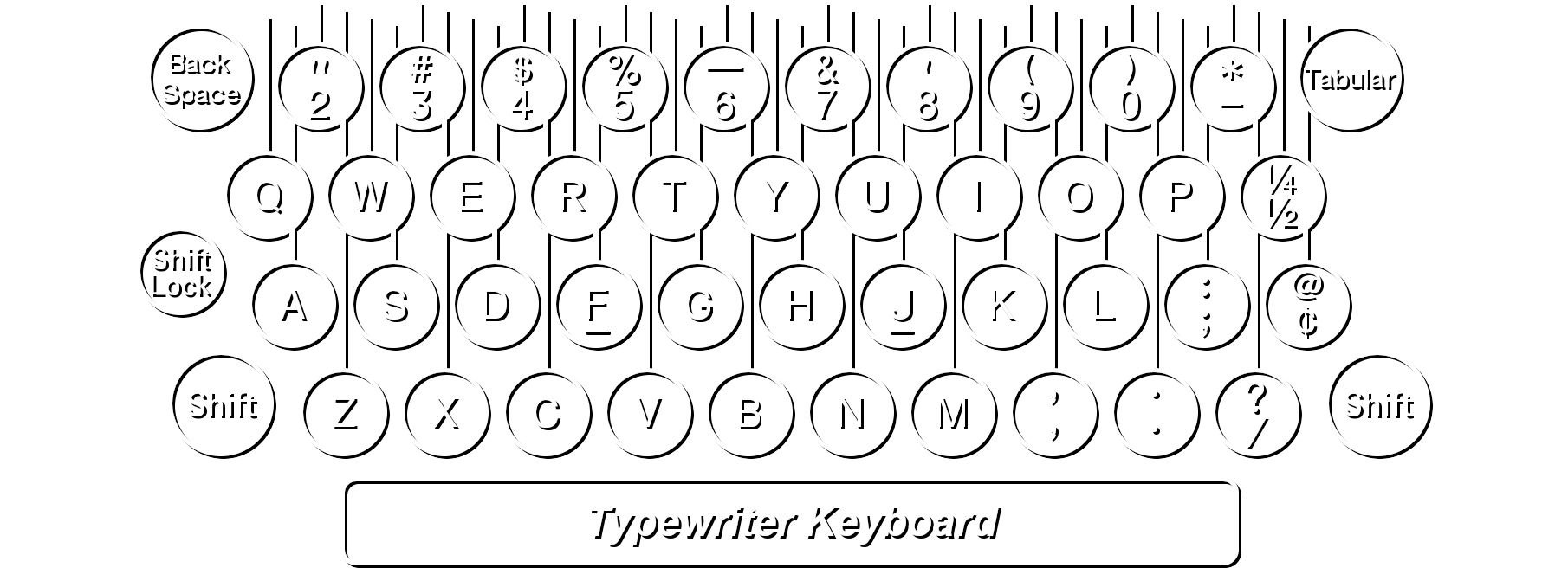
Conventional PC keyboard designs are based upon a typing core inherited from the 152-year-old mechanical typewriter. That typing core consists of a monolithic character key array, with carriage control keys abutting the sides, and a spacebar positioned below. The PC keyboard has other modifier keys in the spacebar-row.
When a character key was depressed on a mechanical typewriter keyboard, it actuated the end of the type lever upon which that key top was fixed. In turn, that type lever actuated a respective type hammer that struck the ink ribbon with a type slug which impressed that specific character mark on the paper.
To allow the type levers passage, none of the keys in the typewriter character key array could be placed in vertical alignment with any other key. So, the character key array has an uneven horizontal displacement between the four rows. Progressing downward, between the rows there is a one-half one-quarter one-half rightward displacement.
The PC keyboard perpetuates that asymmetric 19th-century mechanical typewriter keyboard configuration. Modern typists are bound to that design by a history of 152 years. Notwithstanding, the physical layout of the keys does not provide optimal human biomechanics, as evidenced by its protracted association with carpal tunnel syndrome.
The irregular oblique key columns of conventional keyboards are a hindrance to natural motion. The asymmetric monolithic array of character keys is the source of two glaring flaws in mechanical typewriter keyboard design.
First Design Flaw: It is taxing to actuate the keys that are left of the oblique midline. Users must negotiate left-hand vertical reaches along contrarily angled key columns. They crab their left-hand fingers along the backswept slope of the key columns. Any vertical reach for a key requires a coordinated lateral movement of the left forearm.
A typist maintaining home position (no lateral forearm movement) and following the backswept slope of the key columns must bend their left hand outwardly at the wrist. The hand bones are thrust out of alignment with the ulnar bone of the forearm. This unnatural wrist bending is called ulnar deviation. It is a painful damaging aberration!
The left-hand fingers of an operator negotiating a conventional keyboard work harder than those of the right hand. Upward vertical reaches along contrarily angled key columns require inner fingers to hurdle over outer fingers and downward reaches require outer fingers to crowd under inner fingers.
Second Design Flaw: The right-hand typing assignments compel users, reaching out of home-row, to slightly deviate their fingertips laterally off-axis while following the inconsistent horizontal displacement of keys within the crooked oblique key columns.
While making vertical reaches out of home-row a typist’s fingers contract or extend. The fingertips naturally move in straight paths. The constant skewing required to connect with an outlying key in the jagged key columns is stressful.
Ronald Earl Walker — Mechanical Keyboard Casualty
Mechanical Typewriter Primer
Very few writers born in the third decade of the 21st century will ever see a mechanical typewriter outside a museum.
They inhabit a world dominated by computers and information technology. Every wretched cog of that vexing dystopia is fully two generations beyond the need for a mechanical typewriter.
Still and all, to this day, nearly all computer operators in the world use a keyboard with the same 19th-century mechanical typewriter interface that their great-grandparents used.
Worldwide, conventional keyboards do not meet the needs of human writers. Those old keyboard layouts were contrived to overcome the mechanical limitations of the proto-typewriter.
Ronald Earl Walker — Speaker for the Dead
The Post-Mechanical Chronicle - September 2023 to Present
1. Sep 2023 – The corrected prototype arrived. Writing became comfortable. My left hand is as happy as my right. I will never go back.
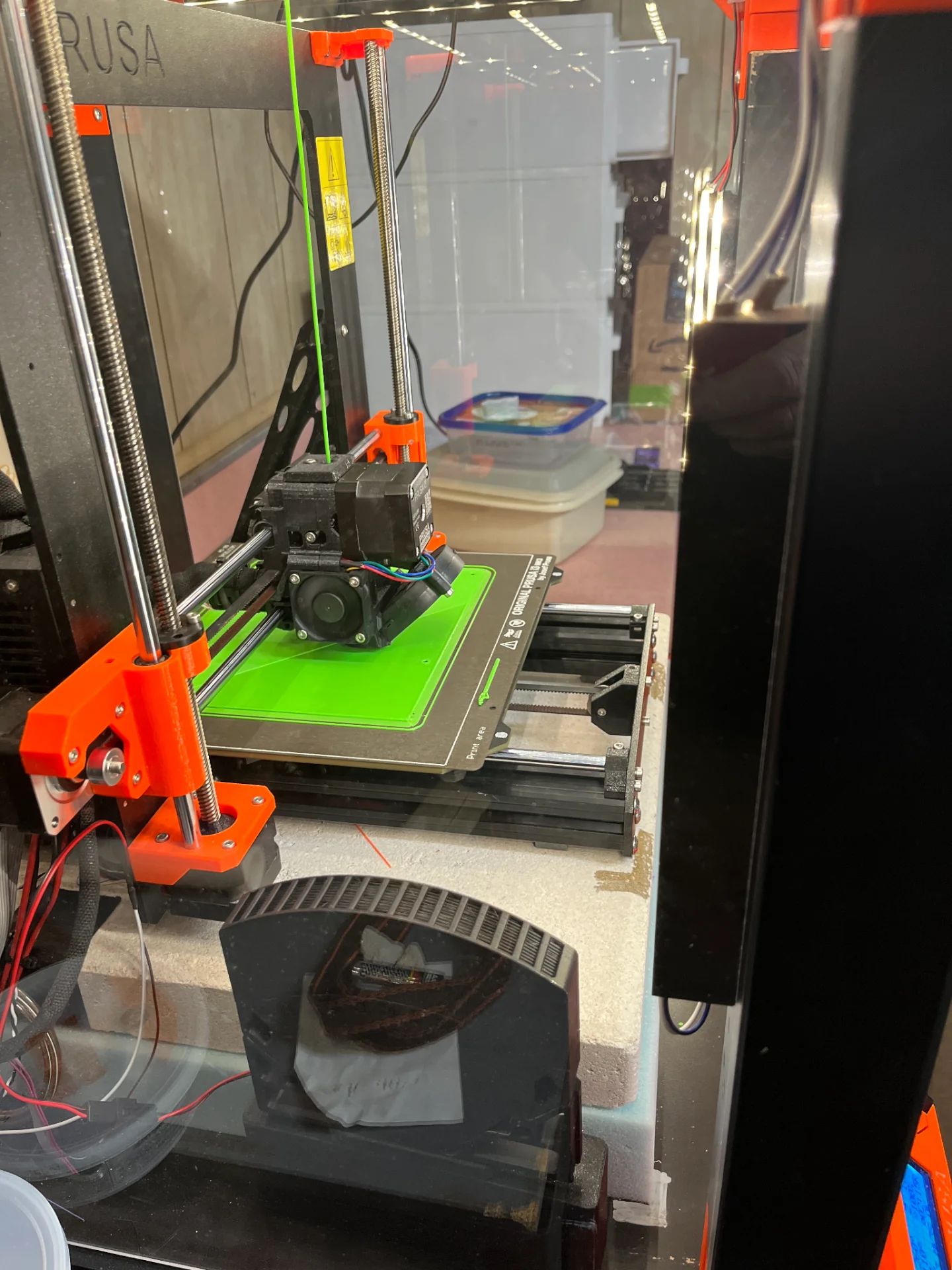
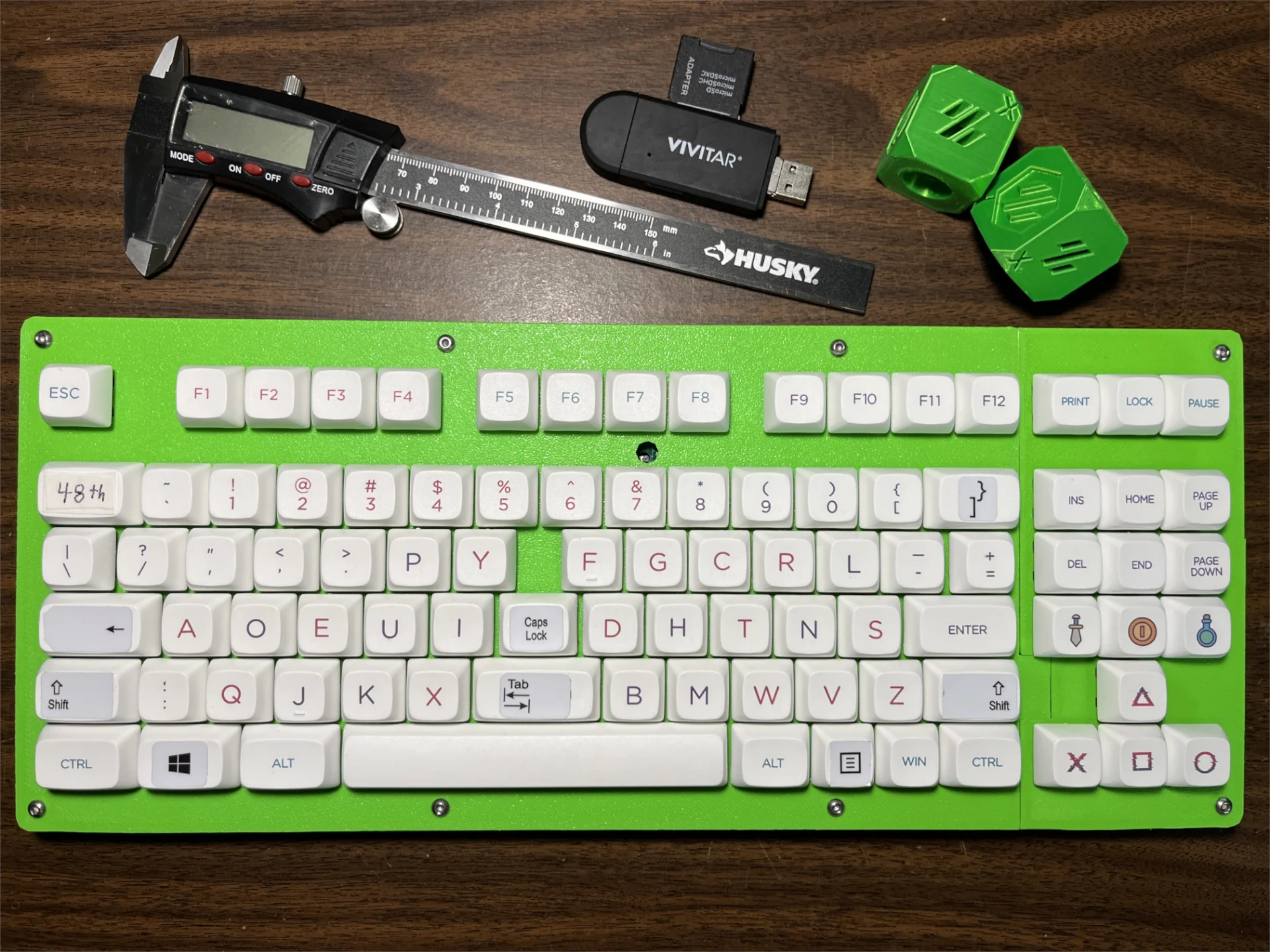
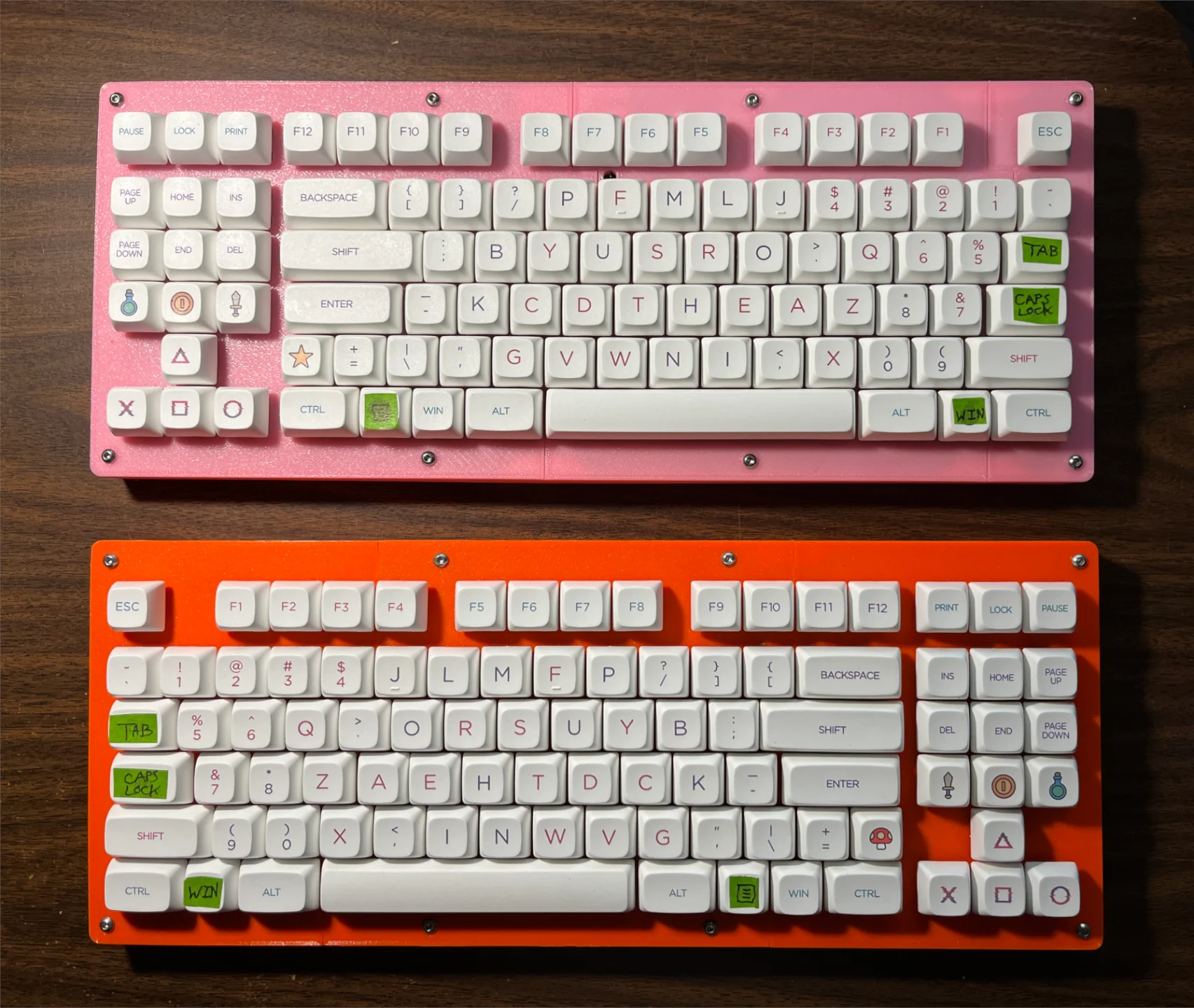
2. Built three more two-hand keyboards. Perfected a spartan 3D printed keyboard case. Wrapped and re-wrapped the keyboards in different plastics and many colors.
3. Despite precautions, styrene fumes from printing ASA poisoned me. The CNS depressant kills: my BP was 60/40.
4. Modified the case design by adding screwed connectors to hold the PETG case parts together. No more poison fumes from ASA!
5. Feb 2024 – Evaluated prototype Left- and Right-Hand TKLs. The strong-side “Shift” key modification makes these keyboards easier to use. Next versions will be separate PCBs.
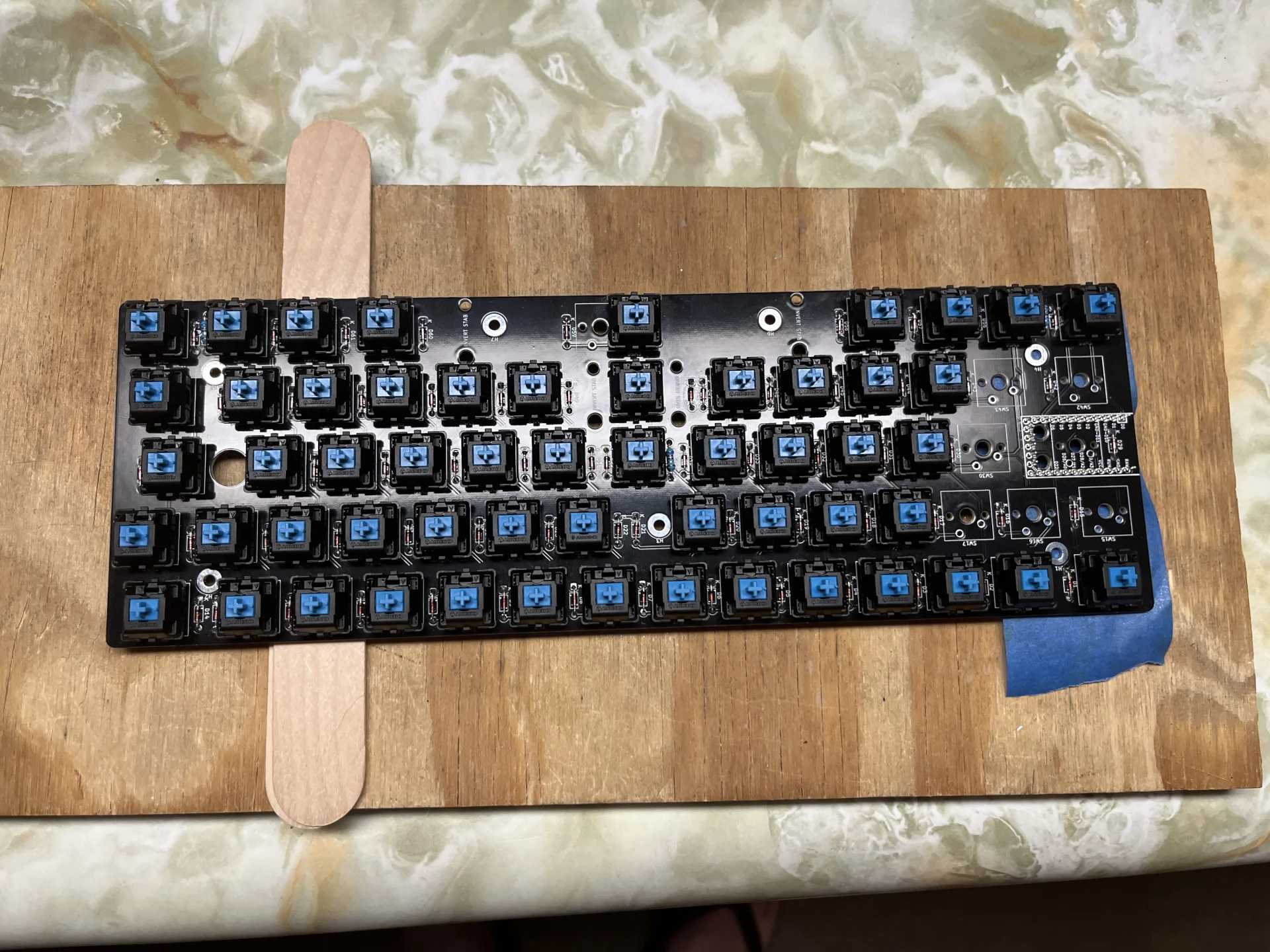
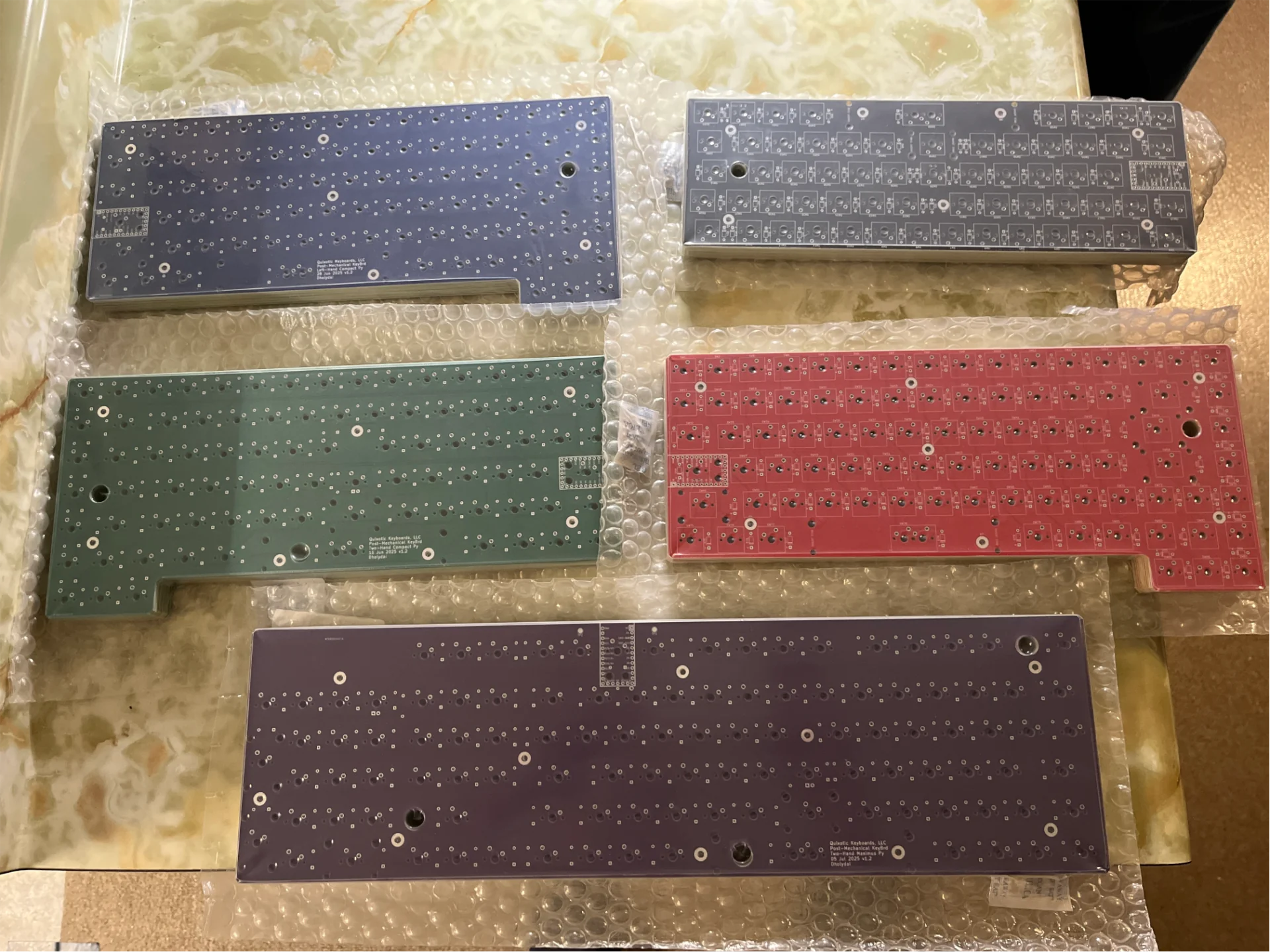
6. Created three new compact designs: Two-Hand, Left-Hand, and Right-Hand. The PCBs have all the component positions marked in silkscreen; perfect for DIYers.
7. Jun 2024 – Built the first compact two-hand. Posted the project to GitHub. Built a Ye Old Qwerty TKL keyboard for my sister. She rejected it because it has no Num pad.
8. Jul 2024 – Built the Right- and Left-Hand compact keyboards. Posted the projects to GitHub.
9. Aug 2024 – Built Two-Hand TKL keyboards. Posted the project to GitHub.
10. Sep 2024 – Finished posting all four of my keyboard projects to the PCBWay+ community site. More in due time.
11. 26 Sep 2024 – Disclosed Quixotic Keyboards, LLC and founded The Post-Mechanical Trust.
12. 01 Dec 2024 – My bilateral symmetric writing core, standing alone, makes the perfect 60% keyboard. Designed a PCB the next day.
13. Built a 60% keyboard. It was ugly in the chunky case. First impressions matter, so I invented a sleek case. Reworked all the PCB designs to fit the new case, adding mounting holes to fit any new minimalist case designs.
14. Printed New Gen cases for all my keyboards. TKLs are now discontinued.
15. 22 Jan 2025 – A new GitHub repository writerz-with-an-attitude was made available.
16. Created a 109-key Maximus keyboard with Num pad and LED status indicators for “Caps Lock” and “Num Lock”.
17. Reworked all of my PCB designs to include LED status indicators.
18. 08 Aug 2025 – Updated my PCBWay+ projects and writerz-with-an-attitude.
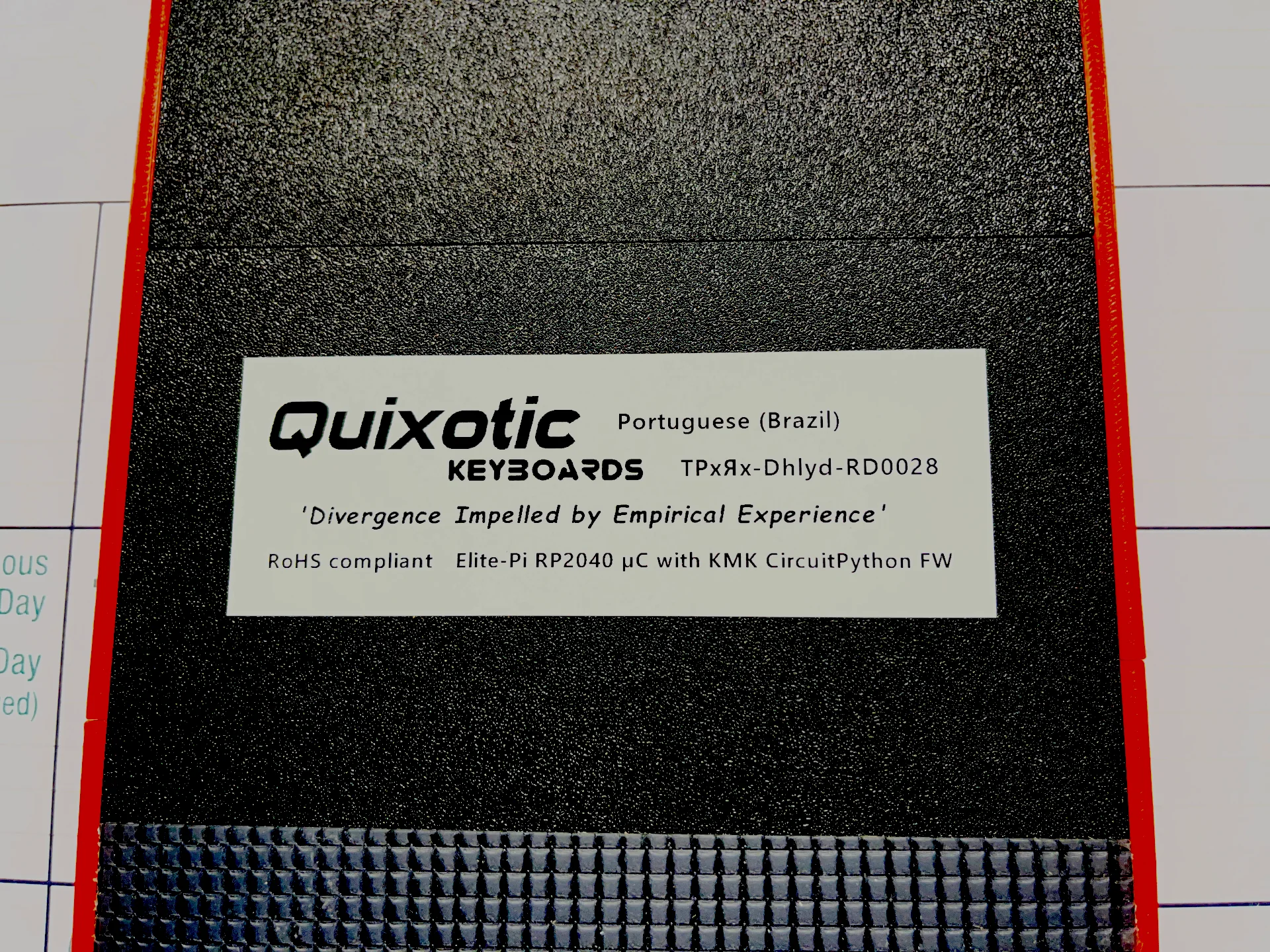
19. Nov 2025 – Started designing foreign language keyboards.
20. Let the Quixotic Keyboards, LLC business license expire: When exporting foreign language keyboards, it is better to be a know-nothing. I cannot satisfy the certification requirements needed.
21. Mar 2026 – Wrote Microslop drivers for Czech, Danish, German, Spanish (Spain), French BÉPO, and Portuguese (Brazil) keyboards.
22. Jun 2026 – Designed and ordered custom keycap sets for French, Spanish, and Brazilian keyboards from YUZU.
23. Aug 2026 – Started building keyboards to increase the number of production keyboards to twenty.
24. Sep 2026 – Built the three Other-Than-English (OTE) keyboards.
Ronald Earl Walker — Tenacious Keyboard Builder

The Post-Mechanical Trust Image Gallery
Qwerty Orthodoxy Has Well-Nigh Run its Course
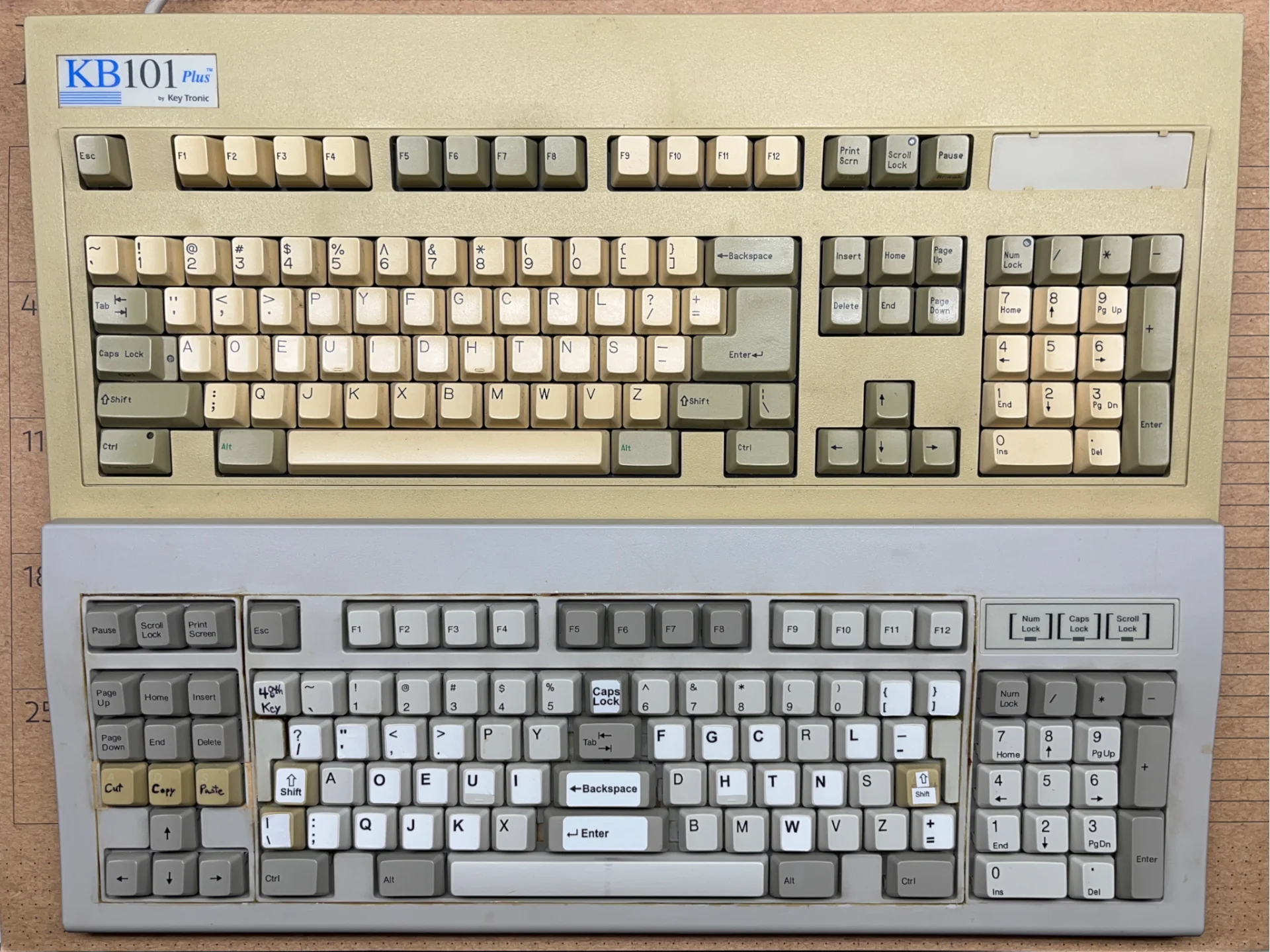
I built one ‘token’ Qwerty abomination for sister, she rejected it. I will not make another Qwerty. Since that time, only Dvorak keyboards have been produced. The 19th-century Qwerty mechanical typewriter interface damages all that use it. Customarily indoctrinating children into the Qwerty tradition is injurious.
In this world, there is nary a writer that is hopelessly banjaxed by Qwerty. If you were tough enough to learn Qwerty, then you are certainly capable of unlearning it… embrace Dvorak 2026 for your sake and your child’s.
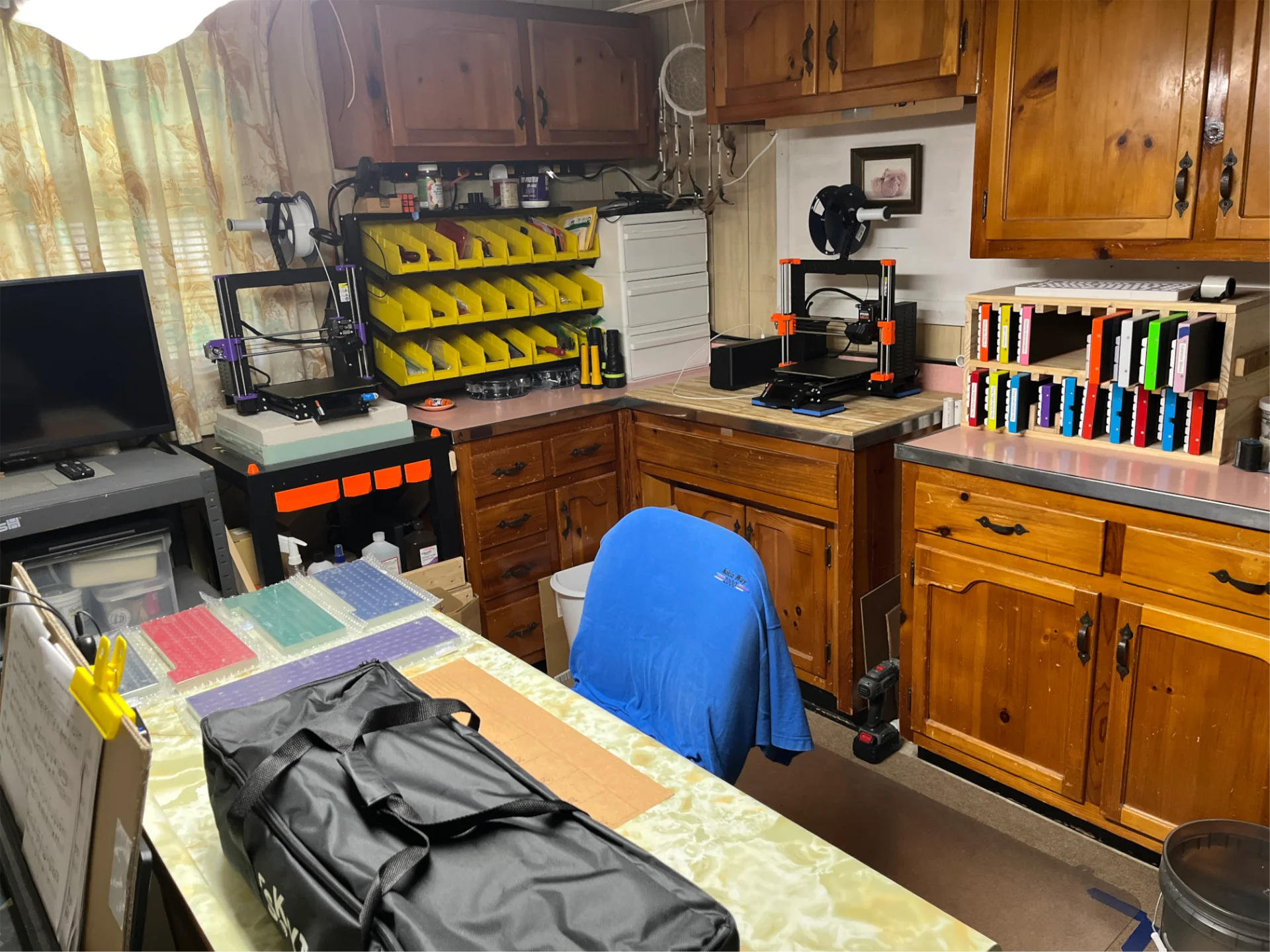
In September 2023 Troy Fletcher shipped the prototype Post-Mechanical keyboard to me, a two-hand tenkeyless (TKL). It had no case, so that year I began designing and 3D printing keyboard cases, perfecting a strong but chunky case.
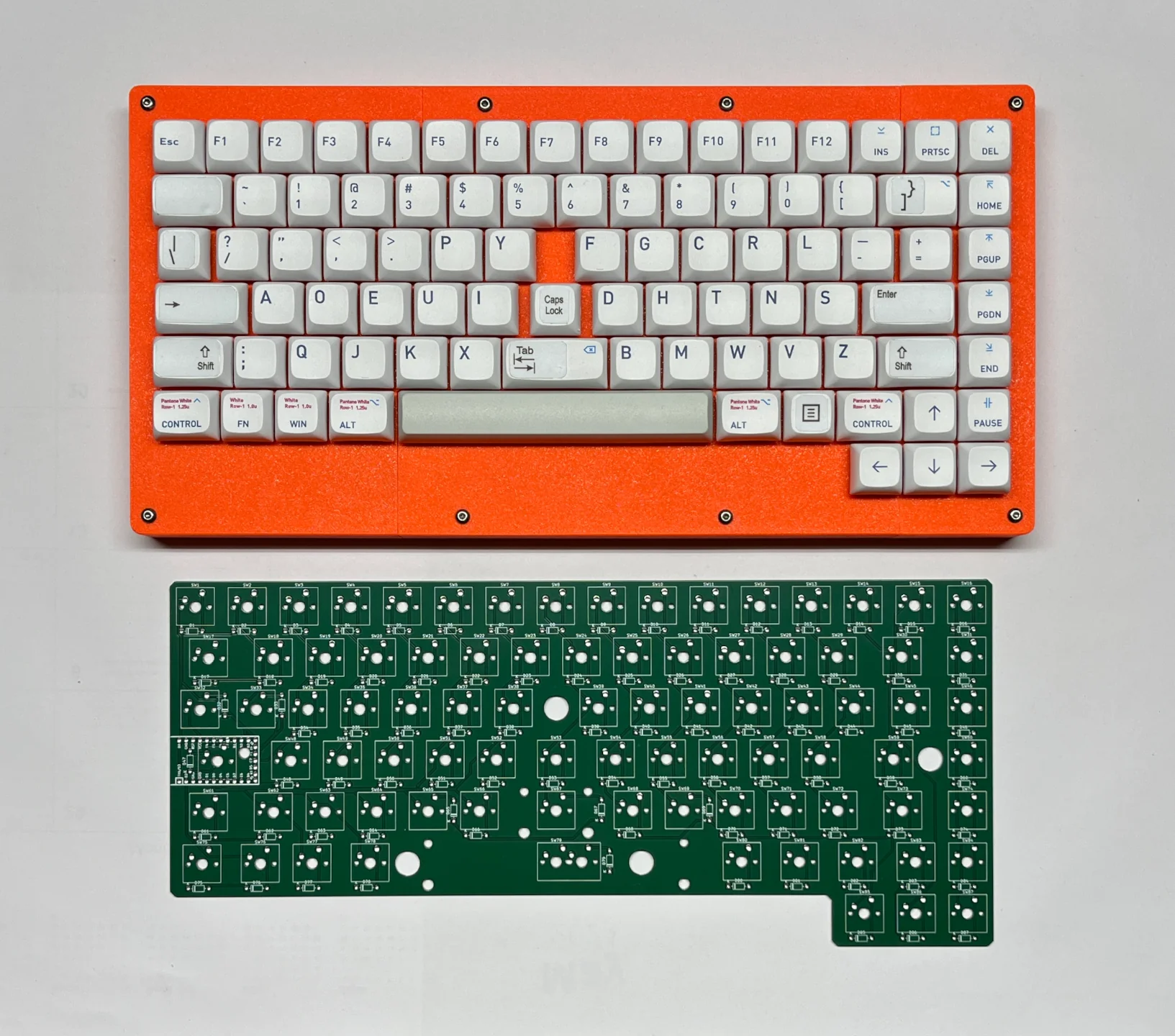
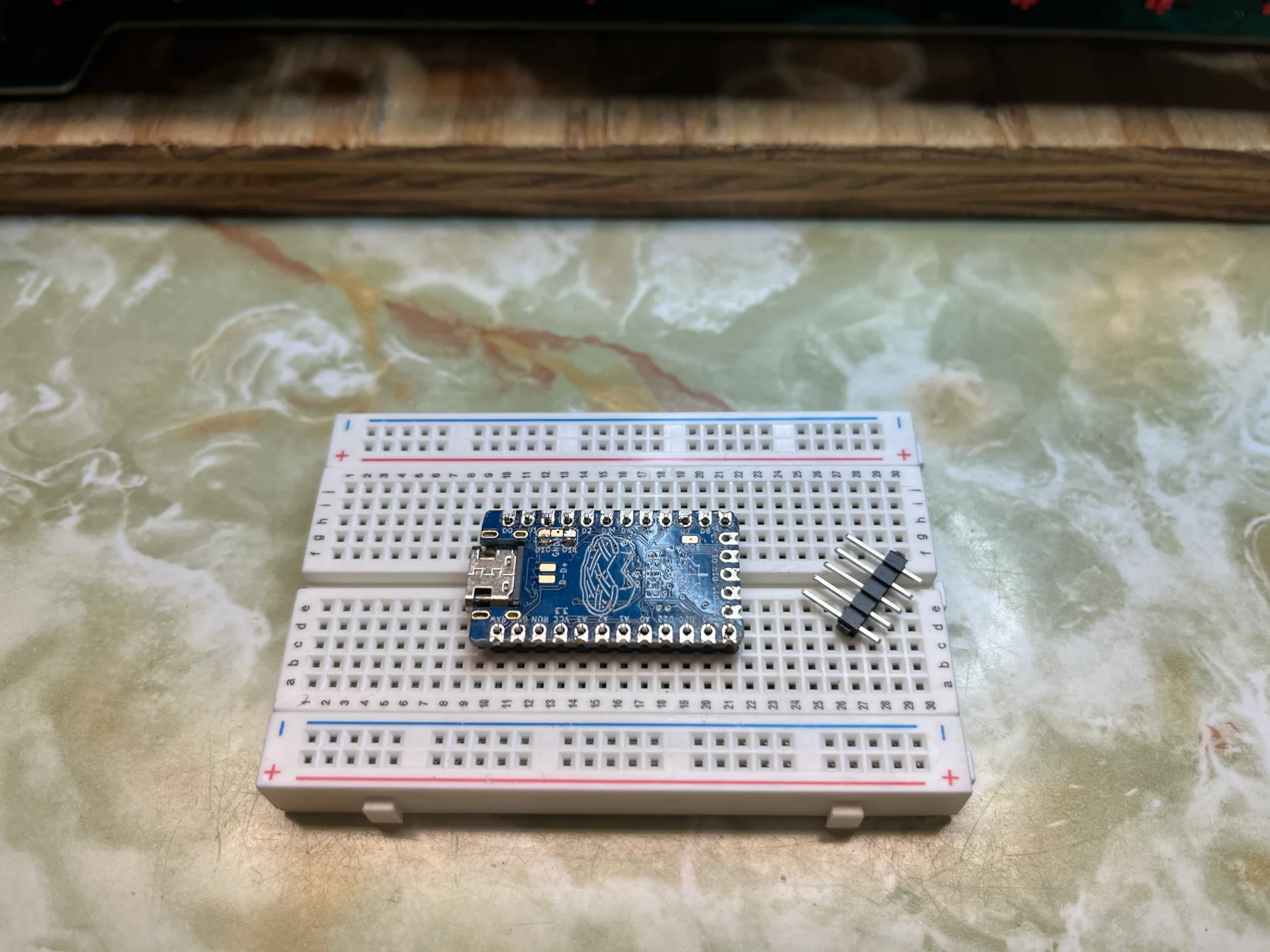
In 2024, I started designing PCBs, abandoning the TKL design and building five new variants. After switching to the Elite-Pi controller, LED status indicators for “Caps Lock” and “Num Lock” were added. Those modifications were retro-fitted into nearly all the CircuitPython driven keyboards in my collection.
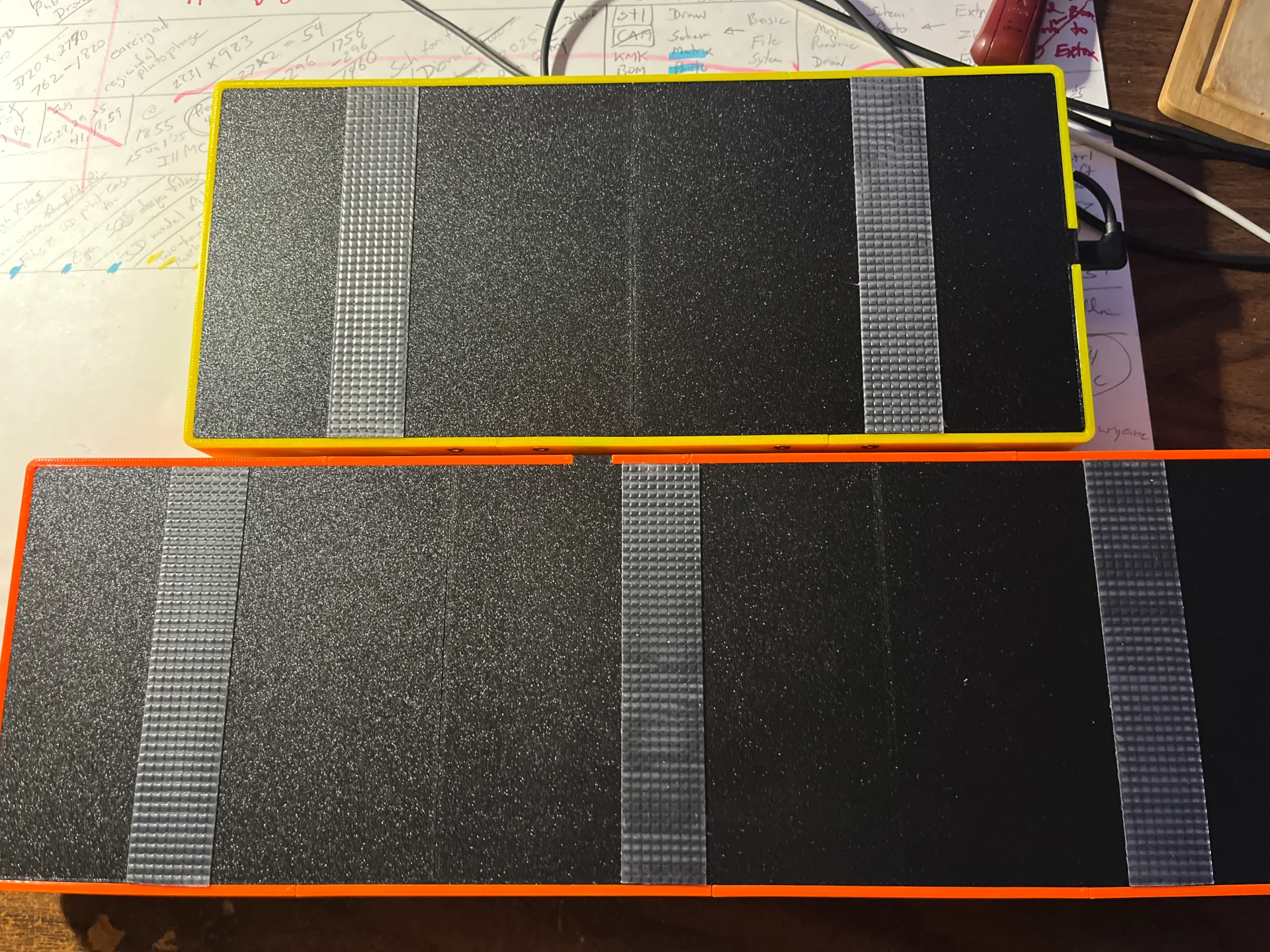
A new method of using the keyboard_stl_generator 3D case modeling software was implemented; sleek-fitting New Gen case designs replaced the previous chunky ones. The PCB designs were all reworked to fit inside the new cases. All the keyboards in my collection are now retro-fitted into new cases.
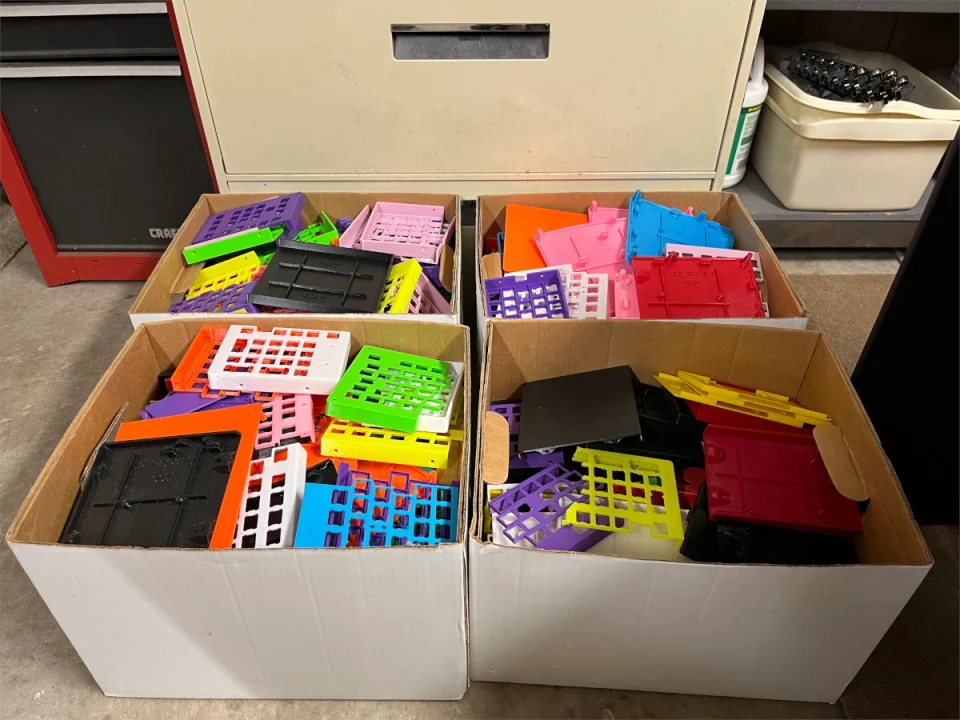
As of September 2025, I have collected four office boxes near full of imperfect or outdated keyboard case sections.
Ronald Earl Walker — Building Keyboards for the Masses
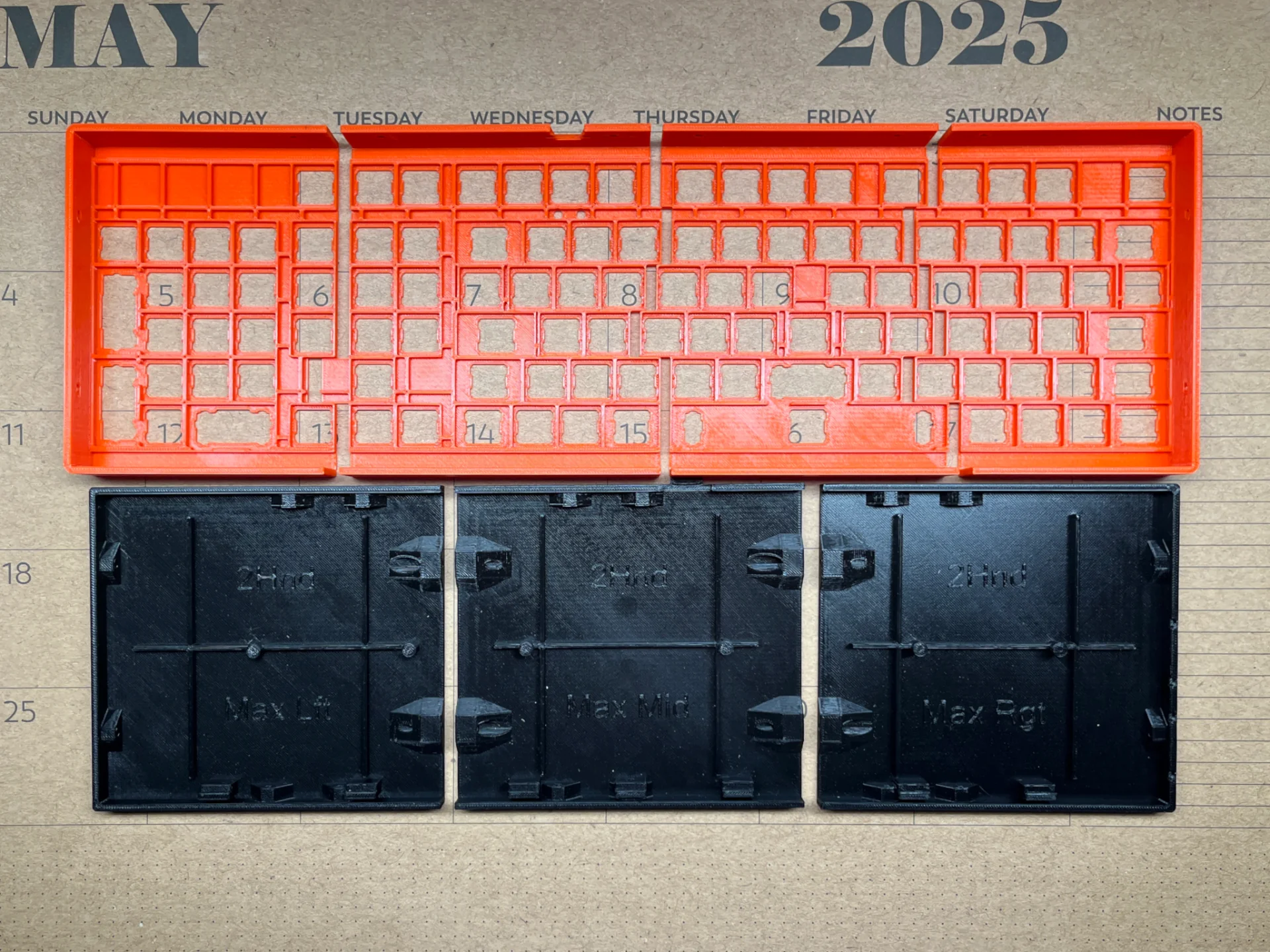
Outdated and Rejected Case Sections
3D printing is an imperfect endeavor. Designing my improved case designs took a lot of prototyping to get perfect fit. Those changes did make a bunch of perfectly good 3D printed products obsolete.